Break The Clipboard!

In the past, when I told my friends and family what I do for work, I usually got the same look. "Wait, so you put solar panels on roofs?" No, not quite.
I came from the energy space, where things are incredibly complex. But the reason I joined the CrowdComfort team was because of something so simple it’s almost wild: the clipboard on the back of the bathroom door.
You know the one. You’ve seen it at retail stores, in restaurants, or even in elevators. It’s a manual, paper-based system that supposedly "validates" that work was done. But let’s be honest—how many times have you looked at one of those and realized it hasn’t been signed in a week? How many times have we seen someone "pencil whip" the process, back-dating entries just to stay in compliance?
It is a barrier to success. And in my opinion, it’s time we finally smash it!
Giving a Voice to the Frontline
For decades, we’ve invested billions in technology to make office workers more efficient. Yet, the last major "technological innovation" for a custodian was probably the yellow mop bucket in 1893.
When we talk about "Breaking the Clipboard," we aren't just talking about going digital. We’re talking about giving frontline workers a tool to communicate.
In our work with large school districts like Chicago Public Schools, we saw this first-hand. Custodians are asked to do so much more than just clean. They are setting up for assemblies, spotting maintenance issues, and identifying safety risks like a back door that won't lock. A clipboard can’t capture that. An app can.
From Judging Failures to Celebrating Successes
Custodial work is often a thankless job. Usually, the only time a custodian hears from management or a building occupant is when there’s a complaint. They are judged on their one failure rather than their hundred successes.
By moving away from the clipboard and into a digital, real-time tracking system, we change the narrative. We’re collecting data that proves how hard these teams are working. I’ll never forget the first time we held an appreciation ceremony for custodians at a client site, handing out certificates based on the data we’d collected. The reaction was dramatic. For the first time, their hard work was visible, validated, and real.
Actionable Intelligence
At CrowdComfort, we have begun using the term “Actionable Intelligence".
You can have the most sophisticated models in the world, but if you don't have the source data from the ground level, you have nothing. By replacing the clipboard with a smartphone app, we are capturing the "ground truth" of what is happening in a facility.
That data allows operators of complex portfolios to make actual differences in how their buildings run. It moves us from guessing to knowing.
The Bottom Line
Change can be apprehensive. I get it—whenever someone asks me to use a new piece of software, I’m the first to ask, "What is this?". But once you see the benefit—the way it keeps people "off your back", “from complaining”, and showcases your value—it becomes indispensable.
We’re helping frontline workers and operators of complex portfolios speak the same language. We’re making the invisible work visible.
So, let’s stop signing pieces of paper that no one looks at. Let’s break the clipboard!
Break The Clipboard!
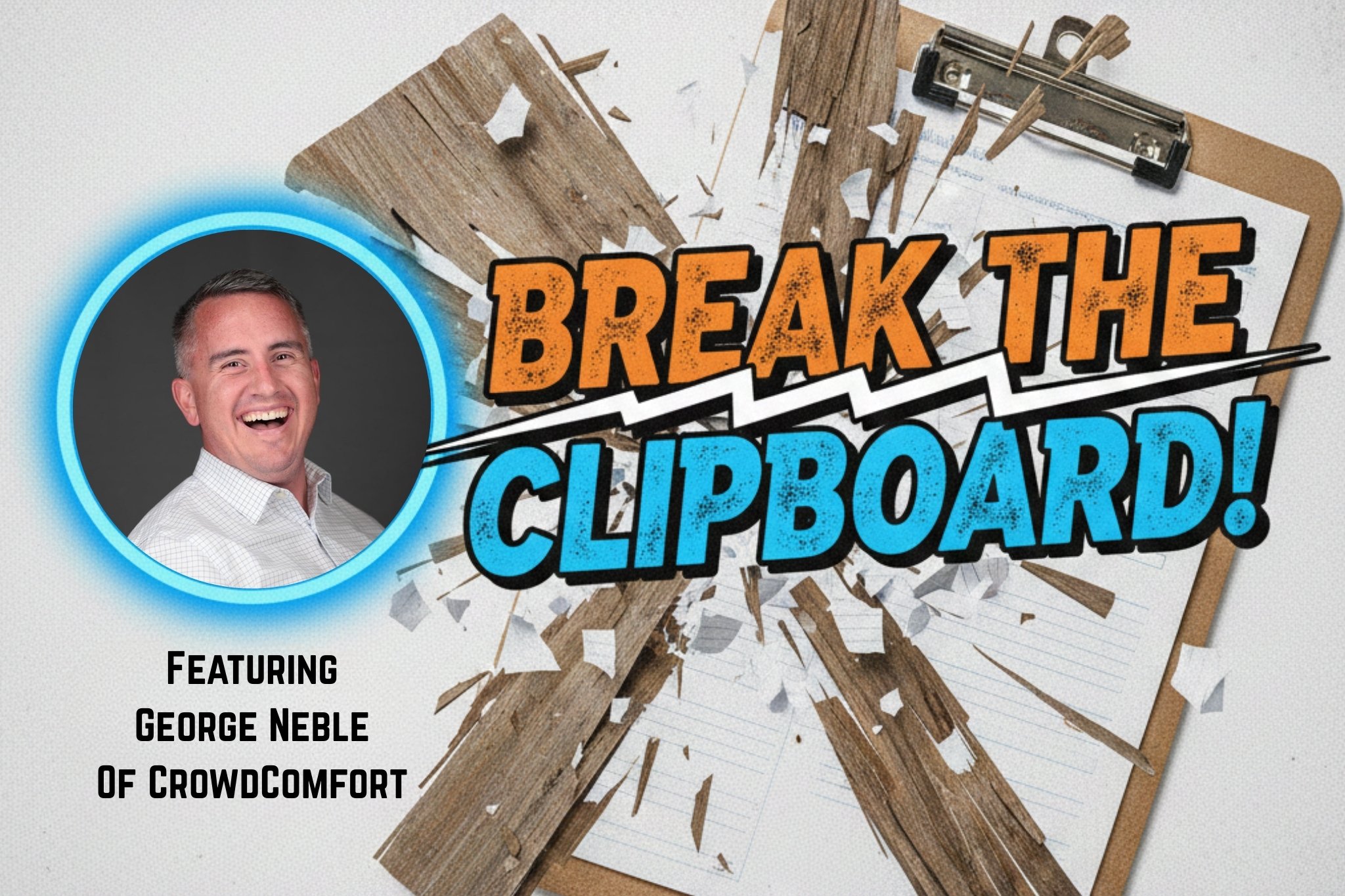
In the past, when I told my friends and family what I do for work, I usually got the same look. "Wait, so you put solar panels on roofs?" No, not quite.
I came from the energy space, where things are incredibly complex. But the reason I joined the CrowdComfort team was because of something so simple it’s almost wild: the clipboard on the back of the bathroom door.
You know the one. You’ve seen it at retail stores, in restaurants, or even in elevators. It’s a manual, paper-based system that supposedly "validates" that work was done. But let’s be honest—how many times have you looked at one of those and realized it hasn’t been signed in a week? How many times have we seen someone "pencil whip" the process, back-dating entries just to stay in compliance?
It is a barrier to success. And in my opinion, it’s time we finally smash it!
Giving a Voice to the Frontline
For decades, we’ve invested billions in technology to make office workers more efficient. Yet, the last major "technological innovation" for a custodian was probably the yellow mop bucket in 1893.
When we talk about "Breaking the Clipboard," we aren't just talking about going digital. We’re talking about giving frontline workers a tool to communicate.
In our work with large school districts like Chicago Public Schools, we saw this first-hand. Custodians are asked to do so much more than just clean. They are setting up for assemblies, spotting maintenance issues, and identifying safety risks like a back door that won't lock. A clipboard can’t capture that. An app can.
From Judging Failures to Celebrating Successes
Custodial work is often a thankless job. Usually, the only time a custodian hears from management or a building occupant is when there’s a complaint. They are judged on their one failure rather than their hundred successes.
By moving away from the clipboard and into a digital, real-time tracking system, we change the narrative. We’re collecting data that proves how hard these teams are working. I’ll never forget the first time we held an appreciation ceremony for custodians at a client site, handing out certificates based on the data we’d collected. The reaction was dramatic. For the first time, their hard work was visible, validated, and real.
Actionable Intelligence
At CrowdComfort, we have begun using the term “Actionable Intelligence".
You can have the most sophisticated models in the world, but if you don't have the source data from the ground level, you have nothing. By replacing the clipboard with a smartphone app, we are capturing the "ground truth" of what is happening in a facility.
That data allows operators of complex portfolios to make actual differences in how their buildings run. It moves us from guessing to knowing.
The Bottom Line
Change can be apprehensive. I get it—whenever someone asks me to use a new piece of software, I’m the first to ask, "What is this?". But once you see the benefit—the way it keeps people "off your back", “from complaining”, and showcases your value—it becomes indispensable.
We’re helping frontline workers and operators of complex portfolios speak the same language. We’re making the invisible work visible.
So, let’s stop signing pieces of paper that no one looks at. Let’s break the clipboard!

Break The Clipboard!
In the past, when I told my friends and family what I do for work, I usually got the same look. "Wait, so you put solar panels on roofs?" No, not quite.
I came from the energy space, where things are incredibly complex. But the reason I joined the CrowdComfort team was because of something so simple it’s almost wild: the clipboard on the back of the bathroom door.
You know the one. You’ve seen it at retail stores, in restaurants, or even in elevators. It’s a manual, paper-based system that supposedly "validates" that work was done. But let’s be honest—how many times have you looked at one of those and realized it hasn’t been signed in a week? How many times have we seen someone "pencil whip" the process, back-dating entries just to stay in compliance?
It is a barrier to success. And in my opinion, it’s time we finally smash it!
Giving a Voice to the Frontline
For decades, we’ve invested billions in technology to make office workers more efficient. Yet, the last major "technological innovation" for a custodian was probably the yellow mop bucket in 1893.
When we talk about "Breaking the Clipboard," we aren't just talking about going digital. We’re talking about giving frontline workers a tool to communicate.
In our work with large school districts like Chicago Public Schools, we saw this first-hand. Custodians are asked to do so much more than just clean. They are setting up for assemblies, spotting maintenance issues, and identifying safety risks like a back door that won't lock. A clipboard can’t capture that. An app can.
From Judging Failures to Celebrating Successes
Custodial work is often a thankless job. Usually, the only time a custodian hears from management or a building occupant is when there’s a complaint. They are judged on their one failure rather than their hundred successes.
By moving away from the clipboard and into a digital, real-time tracking system, we change the narrative. We’re collecting data that proves how hard these teams are working. I’ll never forget the first time we held an appreciation ceremony for custodians at a client site, handing out certificates based on the data we’d collected. The reaction was dramatic. For the first time, their hard work was visible, validated, and real.
Actionable Intelligence
At CrowdComfort, we have begun using the term “Actionable Intelligence".
You can have the most sophisticated models in the world, but if you don't have the source data from the ground level, you have nothing. By replacing the clipboard with a smartphone app, we are capturing the "ground truth" of what is happening in a facility.
That data allows operators of complex portfolios to make actual differences in how their buildings run. It moves us from guessing to knowing.
The Bottom Line
Change can be apprehensive. I get it—whenever someone asks me to use a new piece of software, I’m the first to ask, "What is this?". But once you see the benefit—the way it keeps people "off your back", “from complaining”, and showcases your value—it becomes indispensable.
We’re helping frontline workers and operators of complex portfolios speak the same language. We’re making the invisible work visible.
So, let’s stop signing pieces of paper that no one looks at. Let’s break the clipboard!
Break The Clipboard!
In the past, when I told my friends and family what I do for work, I usually got the same look. "Wait, so you put solar panels on roofs?" No, not quite.
I came from the energy space, where things are incredibly complex. But the reason I joined the CrowdComfort team was because of something so simple it’s almost wild: the clipboard on the back of the bathroom door.
You know the one. You’ve seen it at retail stores, in restaurants, or even in elevators. It’s a manual, paper-based system that supposedly "validates" that work was done. But let’s be honest—how many times have you looked at one of those and realized it hasn’t been signed in a week? How many times have we seen someone "pencil whip" the process, back-dating entries just to stay in compliance?
It is a barrier to success. And in my opinion, it’s time we finally smash it!
Giving a Voice to the Frontline
For decades, we’ve invested billions in technology to make office workers more efficient. Yet, the last major "technological innovation" for a custodian was probably the yellow mop bucket in 1893.
When we talk about "Breaking the Clipboard," we aren't just talking about going digital. We’re talking about giving frontline workers a tool to communicate.
In our work with large school districts like Chicago Public Schools, we saw this first-hand. Custodians are asked to do so much more than just clean. They are setting up for assemblies, spotting maintenance issues, and identifying safety risks like a back door that won't lock. A clipboard can’t capture that. An app can.
From Judging Failures to Celebrating Successes
Custodial work is often a thankless job. Usually, the only time a custodian hears from management or a building occupant is when there’s a complaint. They are judged on their one failure rather than their hundred successes.
By moving away from the clipboard and into a digital, real-time tracking system, we change the narrative. We’re collecting data that proves how hard these teams are working. I’ll never forget the first time we held an appreciation ceremony for custodians at a client site, handing out certificates based on the data we’d collected. The reaction was dramatic. For the first time, their hard work was visible, validated, and real.
Actionable Intelligence
At CrowdComfort, we have begun using the term “Actionable Intelligence".
You can have the most sophisticated models in the world, but if you don't have the source data from the ground level, you have nothing. By replacing the clipboard with a smartphone app, we are capturing the "ground truth" of what is happening in a facility.
That data allows operators of complex portfolios to make actual differences in how their buildings run. It moves us from guessing to knowing.
The Bottom Line
Change can be apprehensive. I get it—whenever someone asks me to use a new piece of software, I’m the first to ask, "What is this?". But once you see the benefit—the way it keeps people "off your back", “from complaining”, and showcases your value—it becomes indispensable.
We’re helping frontline workers and operators of complex portfolios speak the same language. We’re making the invisible work visible.
So, let’s stop signing pieces of paper that no one looks at. Let’s break the clipboard!
Break The Clipboard!
In the past, when I told my friends and family what I do for work, I usually got the same look. "Wait, so you put solar panels on roofs?" No, not quite.
I came from the energy space, where things are incredibly complex. But the reason I joined the CrowdComfort team was because of something so simple it’s almost wild: the clipboard on the back of the bathroom door.
You know the one. You’ve seen it at retail stores, in restaurants, or even in elevators. It’s a manual, paper-based system that supposedly "validates" that work was done. But let’s be honest—how many times have you looked at one of those and realized it hasn’t been signed in a week? How many times have we seen someone "pencil whip" the process, back-dating entries just to stay in compliance?
It is a barrier to success. And in my opinion, it’s time we finally smash it!
Giving a Voice to the Frontline
For decades, we’ve invested billions in technology to make office workers more efficient. Yet, the last major "technological innovation" for a custodian was probably the yellow mop bucket in 1893.
When we talk about "Breaking the Clipboard," we aren't just talking about going digital. We’re talking about giving frontline workers a tool to communicate.
In our work with large school districts like Chicago Public Schools, we saw this first-hand. Custodians are asked to do so much more than just clean. They are setting up for assemblies, spotting maintenance issues, and identifying safety risks like a back door that won't lock. A clipboard can’t capture that. An app can.
From Judging Failures to Celebrating Successes
Custodial work is often a thankless job. Usually, the only time a custodian hears from management or a building occupant is when there’s a complaint. They are judged on their one failure rather than their hundred successes.
By moving away from the clipboard and into a digital, real-time tracking system, we change the narrative. We’re collecting data that proves how hard these teams are working. I’ll never forget the first time we held an appreciation ceremony for custodians at a client site, handing out certificates based on the data we’d collected. The reaction was dramatic. For the first time, their hard work was visible, validated, and real.
Actionable Intelligence
At CrowdComfort, we have begun using the term “Actionable Intelligence".
You can have the most sophisticated models in the world, but if you don't have the source data from the ground level, you have nothing. By replacing the clipboard with a smartphone app, we are capturing the "ground truth" of what is happening in a facility.
That data allows operators of complex portfolios to make actual differences in how their buildings run. It moves us from guessing to knowing.
The Bottom Line
Change can be apprehensive. I get it—whenever someone asks me to use a new piece of software, I’m the first to ask, "What is this?". But once you see the benefit—the way it keeps people "off your back", “from complaining”, and showcases your value—it becomes indispensable.
We’re helping frontline workers and operators of complex portfolios speak the same language. We’re making the invisible work visible.
So, let’s stop signing pieces of paper that no one looks at. Let’s break the clipboard!
Break The Clipboard!
Break The Clipboard!
In the past, when I told my friends and family what I do for work, I usually got the same look. "Wait, so you put solar panels on roofs?" No, not quite.
I came from the energy space, where things are incredibly complex. But the reason I joined the CrowdComfort team was because of something so simple it’s almost wild: the clipboard on the back of the bathroom door.
You know the one. You’ve seen it at retail stores, in restaurants, or even in elevators. It’s a manual, paper-based system that supposedly "validates" that work was done. But let’s be honest—how many times have you looked at one of those and realized it hasn’t been signed in a week? How many times have we seen someone "pencil whip" the process, back-dating entries just to stay in compliance?
It is a barrier to success. And in my opinion, it’s time we finally smash it!
Giving a Voice to the Frontline
For decades, we’ve invested billions in technology to make office workers more efficient. Yet, the last major "technological innovation" for a custodian was probably the yellow mop bucket in 1893.
When we talk about "Breaking the Clipboard," we aren't just talking about going digital. We’re talking about giving frontline workers a tool to communicate.
In our work with large school districts like Chicago Public Schools, we saw this first-hand. Custodians are asked to do so much more than just clean. They are setting up for assemblies, spotting maintenance issues, and identifying safety risks like a back door that won't lock. A clipboard can’t capture that. An app can.
From Judging Failures to Celebrating Successes
Custodial work is often a thankless job. Usually, the only time a custodian hears from management or a building occupant is when there’s a complaint. They are judged on their one failure rather than their hundred successes.
By moving away from the clipboard and into a digital, real-time tracking system, we change the narrative. We’re collecting data that proves how hard these teams are working. I’ll never forget the first time we held an appreciation ceremony for custodians at a client site, handing out certificates based on the data we’d collected. The reaction was dramatic. For the first time, their hard work was visible, validated, and real.
Actionable Intelligence
At CrowdComfort, we have begun using the term “Actionable Intelligence".
You can have the most sophisticated models in the world, but if you don't have the source data from the ground level, you have nothing. By replacing the clipboard with a smartphone app, we are capturing the "ground truth" of what is happening in a facility.
That data allows operators of complex portfolios to make actual differences in how their buildings run. It moves us from guessing to knowing.
The Bottom Line
Change can be apprehensive. I get it—whenever someone asks me to use a new piece of software, I’m the first to ask, "What is this?". But once you see the benefit—the way it keeps people "off your back", “from complaining”, and showcases your value—it becomes indispensable.
We’re helping frontline workers and operators of complex portfolios speak the same language. We’re making the invisible work visible.
So, let’s stop signing pieces of paper that no one looks at. Let’s break the clipboard!
Break The Clipboard!
In the past, when I told my friends and family what I do for work, I usually got the same look. "Wait, so you put solar panels on roofs?" No, not quite.
I came from the energy space, where things are incredibly complex. But the reason I joined the CrowdComfort team was because of something so simple it’s almost wild: the clipboard on the back of the bathroom door.
You know the one. You’ve seen it at retail stores, in restaurants, or even in elevators. It’s a manual, paper-based system that supposedly "validates" that work was done. But let’s be honest—how many times have you looked at one of those and realized it hasn’t been signed in a week? How many times have we seen someone "pencil whip" the process, back-dating entries just to stay in compliance?
It is a barrier to success. And in my opinion, it’s time we finally smash it!
Giving a Voice to the Frontline
For decades, we’ve invested billions in technology to make office workers more efficient. Yet, the last major "technological innovation" for a custodian was probably the yellow mop bucket in 1893.
When we talk about "Breaking the Clipboard," we aren't just talking about going digital. We’re talking about giving frontline workers a tool to communicate.
In our work with large school districts like Chicago Public Schools, we saw this first-hand. Custodians are asked to do so much more than just clean. They are setting up for assemblies, spotting maintenance issues, and identifying safety risks like a back door that won't lock. A clipboard can’t capture that. An app can.
From Judging Failures to Celebrating Successes
Custodial work is often a thankless job. Usually, the only time a custodian hears from management or a building occupant is when there’s a complaint. They are judged on their one failure rather than their hundred successes.
By moving away from the clipboard and into a digital, real-time tracking system, we change the narrative. We’re collecting data that proves how hard these teams are working. I’ll never forget the first time we held an appreciation ceremony for custodians at a client site, handing out certificates based on the data we’d collected. The reaction was dramatic. For the first time, their hard work was visible, validated, and real.
Actionable Intelligence
At CrowdComfort, we have begun using the term “Actionable Intelligence".
You can have the most sophisticated models in the world, but if you don't have the source data from the ground level, you have nothing. By replacing the clipboard with a smartphone app, we are capturing the "ground truth" of what is happening in a facility.
That data allows operators of complex portfolios to make actual differences in how their buildings run. It moves us from guessing to knowing.
The Bottom Line
Change can be apprehensive. I get it—whenever someone asks me to use a new piece of software, I’m the first to ask, "What is this?". But once you see the benefit—the way it keeps people "off your back", “from complaining”, and showcases your value—it becomes indispensable.
We’re helping frontline workers and operators of complex portfolios speak the same language. We’re making the invisible work visible.
So, let’s stop signing pieces of paper that no one looks at. Let’s break the clipboard!
Break The Clipboard!
In the past, when I told my friends and family what I do for work, I usually got the same look. "Wait, so you put solar panels on roofs?" No, not quite.
I came from the energy space, where things are incredibly complex. But the reason I joined the CrowdComfort team was because of something so simple it’s almost wild: the clipboard on the back of the bathroom door.
You know the one. You’ve seen it at retail stores, in restaurants, or even in elevators. It’s a manual, paper-based system that supposedly "validates" that work was done. But let’s be honest—how many times have you looked at one of those and realized it hasn’t been signed in a week? How many times have we seen someone "pencil whip" the process, back-dating entries just to stay in compliance?
It is a barrier to success. And in my opinion, it’s time we finally smash it!
Giving a Voice to the Frontline
For decades, we’ve invested billions in technology to make office workers more efficient. Yet, the last major "technological innovation" for a custodian was probably the yellow mop bucket in 1893.
When we talk about "Breaking the Clipboard," we aren't just talking about going digital. We’re talking about giving frontline workers a tool to communicate.
In our work with large school districts like Chicago Public Schools, we saw this first-hand. Custodians are asked to do so much more than just clean. They are setting up for assemblies, spotting maintenance issues, and identifying safety risks like a back door that won't lock. A clipboard can’t capture that. An app can.
From Judging Failures to Celebrating Successes
Custodial work is often a thankless job. Usually, the only time a custodian hears from management or a building occupant is when there’s a complaint. They are judged on their one failure rather than their hundred successes.
By moving away from the clipboard and into a digital, real-time tracking system, we change the narrative. We’re collecting data that proves how hard these teams are working. I’ll never forget the first time we held an appreciation ceremony for custodians at a client site, handing out certificates based on the data we’d collected. The reaction was dramatic. For the first time, their hard work was visible, validated, and real.
Actionable Intelligence
At CrowdComfort, we have begun using the term “Actionable Intelligence".
You can have the most sophisticated models in the world, but if you don't have the source data from the ground level, you have nothing. By replacing the clipboard with a smartphone app, we are capturing the "ground truth" of what is happening in a facility.
That data allows operators of complex portfolios to make actual differences in how their buildings run. It moves us from guessing to knowing.
The Bottom Line
Change can be apprehensive. I get it—whenever someone asks me to use a new piece of software, I’m the first to ask, "What is this?". But once you see the benefit—the way it keeps people "off your back", “from complaining”, and showcases your value—it becomes indispensable.
We’re helping frontline workers and operators of complex portfolios speak the same language. We’re making the invisible work visible.
So, let’s stop signing pieces of paper that no one looks at. Let’s break the clipboard!

In the past, when I told my friends and family what I do for work, I usually got the same look. "Wait, so you put solar panels on roofs?" No, not quite.
I came from the energy space, where things are incredibly complex. But the reason I joined the CrowdComfort team was because of something so simple it’s almost wild: the clipboard on the back of the bathroom door.
You know the one. You’ve seen it at retail stores, in restaurants, or even in elevators. It’s a manual, paper-based system that supposedly "validates" that work was done. But let’s be honest—how many times have you looked at one of those and realized it hasn’t been signed in a week? How many times have we seen someone "pencil whip" the process, back-dating entries just to stay in compliance?
It is a barrier to success. And in my opinion, it’s time we finally smash it!
Giving a Voice to the Frontline
For decades, we’ve invested billions in technology to make office workers more efficient. Yet, the last major "technological innovation" for a custodian was probably the yellow mop bucket in 1893.
When we talk about "Breaking the Clipboard," we aren't just talking about going digital. We’re talking about giving frontline workers a tool to communicate.
In our work with large school districts like Chicago Public Schools, we saw this first-hand. Custodians are asked to do so much more than just clean. They are setting up for assemblies, spotting maintenance issues, and identifying safety risks like a back door that won't lock. A clipboard can’t capture that. An app can.
From Judging Failures to Celebrating Successes
Custodial work is often a thankless job. Usually, the only time a custodian hears from management or a building occupant is when there’s a complaint. They are judged on their one failure rather than their hundred successes.
By moving away from the clipboard and into a digital, real-time tracking system, we change the narrative. We’re collecting data that proves how hard these teams are working. I’ll never forget the first time we held an appreciation ceremony for custodians at a client site, handing out certificates based on the data we’d collected. The reaction was dramatic. For the first time, their hard work was visible, validated, and real.
Actionable Intelligence
At CrowdComfort, we have begun using the term “Actionable Intelligence".
You can have the most sophisticated models in the world, but if you don't have the source data from the ground level, you have nothing. By replacing the clipboard with a smartphone app, we are capturing the "ground truth" of what is happening in a facility.
That data allows operators of complex portfolios to make actual differences in how their buildings run. It moves us from guessing to knowing.
The Bottom Line
Change can be apprehensive. I get it—whenever someone asks me to use a new piece of software, I’m the first to ask, "What is this?". But once you see the benefit—the way it keeps people "off your back", “from complaining”, and showcases your value—it becomes indispensable.
We’re helping frontline workers and operators of complex portfolios speak the same language. We’re making the invisible work visible.
So, let’s stop signing pieces of paper that no one looks at. Let’s break the clipboard!